FIELD NOTES / 02 Content studies
The same drink, but why does one person shoot it like an ad while another makes it feel like everyday life?
Using a fictional drink and a six-panel storyboard, compare product-led and situation-led narrative starting points, and observe how shots, captions, and information work together.
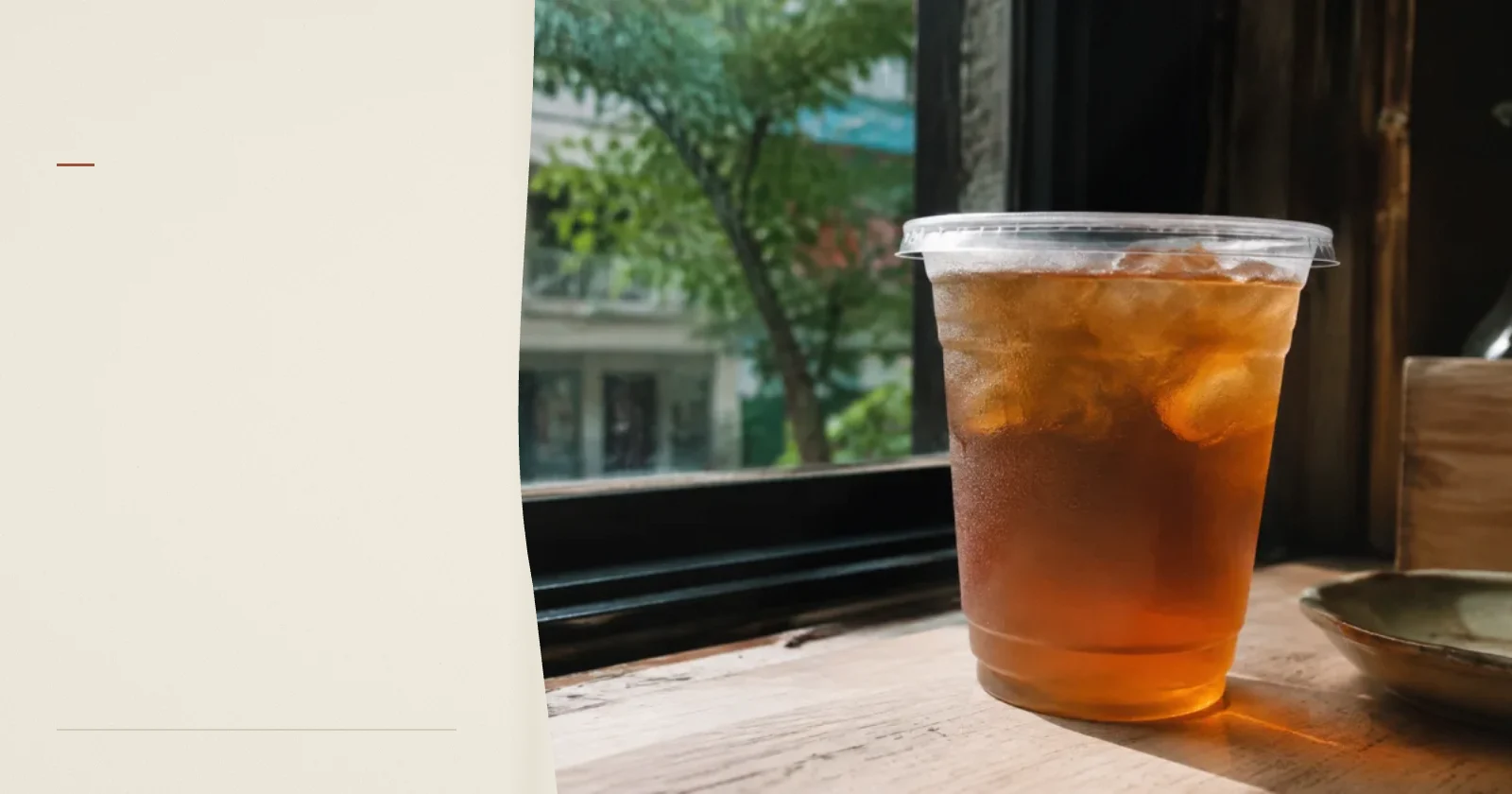
One drink,two stories.
Show the product first,
or step into an everyday moment.
The same drink can begin with a close-up of the cup, or with someone finishing a hot walk and sitting down to rest. The first route shows us the product; the second brings us into a situation. The difference is not only whether the image looks good, but what question gets asked first.
We will use a fictional tea with no brand and no real performance data as a practice example. This is not a claim that everyday storytelling is always more effective than an ad-like approach, nor an invitation to disguise a commercial collaboration as ordinary life. We are simply taking the story apart to see what each shot is responsible for.
01 / Decide where the story starts
A product-led opening might ask, “What is this, and what makes it distinctive?” The image first establishes the cup, ingredients, or preparation, then adds a description of how it tastes. The information is concentrated, which suits content that needs to show details clearly; the trade-off is that if every frame repeats a selling point, viewers may not know what the drink has to do with their own lives.
A situation-led opening instead asks, “When would I encounter this drink?” It could be the end of a work session, a walk with friends, or something to pair with lunch. The product is part of the situation, but if the story finishes without explaining the drink, viewers may remember only the walk and the scenery.
These are not opposing styles. A piece can enter through an everyday moment and then cut to product detail. The thing to avoid is not one particular format, but a sequence with many shots and much information whose relationship to one another is impossible to find.
02 / See two paths through six storyboard frames
Try arranging three shots for the same fictional tea. Look at the order of the images before reading the text under each frame; this storyboard represents narrative functions, not an ideal duration or success formula for any particular platform.
Path A / Product first
01 Show the drink
Place the cup on a clean table to establish the subject.
02 Move in for detail
Use a close-up of tea and ice to explain the visible features.
03 Add the sensory impression
Describe a personal taste impression without speaking for everyone.
Path B / Situation first
01 Enter the everyday
Begin with the moment of sitting down after a walk.
02 Bring in the drink
Set the cup by the window and connect the product to the story.
03 Leave a memory
Return to the link between product and situation, not just the scenery.
If you swap the second frame in the two paths, the story changes too: an everyday moment may suddenly turn into dense product information, while a specification showcase may gain pauses and atmosphere. This is not a right-or-wrong exercise. It is a reminder that a transition is not only an editing technique; it also changes the order in which readers receive information.
A storyboard has to be specific before you can see what is missing. “Make it feel natural” is hard to execute; “Place the cup by the window, then use a close shot to show what is inside” gives the frame a clear job. Make the idea clear first, then decide whether complex production is necessary.
03 / Give the image and information separate jobs
| Layer | Can handle | Avoid |
|---|---|---|
| Shot | Show appearance, action, and usage context | Use an atmospheric image as fake proof of a product effect |
| Caption | Add a name or condition the image cannot show | Pack in every detail at once, leaving no time to read |
| Narration | Explain a personal reaction and reason for choosing | Present one person’s taste as something everyone will like |
If the image clearly shows ice, the caption does not necessarily need to say, “There is ice inside.” Captions can add a condition the image cannot explain; conversely, the single word “refreshing” cannot replace a specific description of mouthfeel. Removing repetition may make the content easier to understand.
This exercise can help you take a story apart, but it cannot prove which video will sell better. Actual performance is also shaped by the audience, publishing context, price, and many other factors. An everyday style is not a reason to hide a commercial relationship; the way something is filmed and the clarity of the collaboration disclosure are separate matters.
Editorial and material notes
This article and all six frames are original narrative exercises; the drink and scenes are illustrative. No real brand packaging, client footage, or performance data was used, and no filming style is presented as having a guaranteed sales advantage.